Showing posts with label Nature. Show all posts

Sunday, July 15, 2012

Proactive Protection Against Parmalee Catastrophe; Clever Fishie

A piece of encouraging news from the Freep yesterday.


The Anglers of the Au Sable aren't what you'd call a go-along, get-along gang.
Dedicated to protecting the Au Sable River and its watershed, the 700-member organization has, at various times in its 25-year history, vilified politicians, shamed bureaucrats and sued the pants off those they perceived as threats to the river.


So in the latter half of 2010 -- when awareness began to spread through the Anglers' ranks that Enbridge Energy Partners, the company responsible for the 800,000 gallon oil spill in the Kalamazoo River that July, had another aging pipeline handling up to 22 million gallons a day that crossed under their beloved trout stream near Luzerne [as best I can tell, somewhere in the neighborhood of Parmalee bridge] -- you might have expected things to get prickly.

But they didn't.

Instead, through a series of meetings and discussions between Enbridge officials and leaders of the Anglers, a somewhat unorthodox partnership was born. One which has resulted in the company installing a remote-controlled shut-off valve at a cost of $300,000-$500,000 on the south side of the river, visits to Grayling by Enbridge CEO Patrick Daniel and surprising praise for Big Oil from hard-line conservationists. 

Read the rest.


This group has done amazing things to protect the AS watershed, and it's nice to see them getting out in front of something like this.   Much preferable to after-the-fact lawsuits.

*******

In other news, it seems whale sharks have taken bait stealing to the next level:


Wonder if a small clouser might fool one of those--or would I have to cast a net full of them? 


Friday, July 13, 2012

Post of Evil x 2 (& Ominous Portents for Duck Season)

My 666th post on Friday the 13th!  I've draped myself  with crucifixes to prevent channeling some demon while I type  (and here the camera on my laptop is broken...so sorry...)

Actually, I saw something yesterday that's even more troubling.  Early in the morning I went to look at some of my waterfowling spots and found them either dry or super low on water.  The pond where I planned to ambush  some geese on the early goose opener now consists of a mud flat with scattered puddles, which may mean I don't hunt early goose at all. It shouldn't be a shock, I guess, given the dry winter and the lack of rain and high temps this summer.  Opening day plans are going to change drastically unless we get September monsoons, and I won't hold my breath. 

This in a year with a good hatch, too.  Hope any ducklings reared in these spots managed to get to bigger water. 

And as I sit blogging on the day of evil...I wonder if I could sell my soul for a weekly deluge?

Wednesday, May 09, 2012

#100

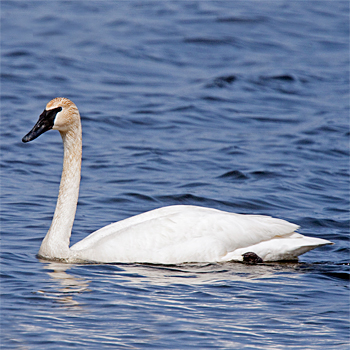
A couple of years ago I started keeping a list of the bird species I've seen--what a serious birdwatcher would call a "life list."  I am not such a birdwatcher, but after reading an interesting memoir by one, I decided to total up whatever birds I had seen, and was pleasantly surprised when I counted into the low 90s. Since then I've added a few, and last night I encountered my one hundredth.  It was a bird worthy of a milestone--a trumpeter swan, the world's largest waterfowl.  A pair of them actually, and I saw them in, of all places, the pond in the petting zoo at Domino's Farms, which my wife and I pass on our regular walking route.  Naturally I didn't have a camera, but here's a look at one:


A while after we stopped to watch them they began rapidly bobbing their heads (alarm behavior?) and shortly thereafter took off, making their namesake call (listen to it here). It was like watching a small plane taking off. 


Who knows what #101 will be, but I doubt it's going to top this.

Thursday, June 16, 2011

Huron River, 6/15; Bears in them thar 'burbs!

Planned a run to Cloud Creek last night but hit a traffic jam on the way out of Ann Arbor that took nearly half an hour to clear. By that time rain was falling too and the radio advised thunderstorms were on the way. So I changed plans and went to the Huron.

I got on the river at Dexter-Huron metropark around 6:30, and I was the only soul around. The light rain would have driven off the picknickers and frisbee players, but I found it soothing. Though the river was on the high side, I could wade safely as long as I stayed within 40 feet of the bank. I saw light cahills and several kinds of caddis in good numbers but nothing was rising. Tried several olive, black, and brown streamers and had four brief hookups, but didn't bring anything to hand. The fish felt like they had some weight to them, too. All the hits came in spots where willow branches extended well over the water. Around 8:00 the rain began falling harder and I headed for the car.

I'm looking forward to many more nights on the Huron, but I am absolutely determined to make a Cloud Creek run, and preferably several, this year.


Oh, and having mentioned Dexter, I should note that confirmed sightings of a black bear have taken place there in the past week. Super cool, in my book. I think there are plenty of places just west of there where bears could find suitable feeding and hiding spots. Of course, some locals are worried, but the possibility of anyone being hurt by the animal (assuming they don't try to feed it by hand) is negligible. Though it is certainly possible some bird feeders and garbage cans might take it hard. The authorities have asked residents to call 9-1-1 if they sight the bear, which seems a bit odd--is it illegal for bears to enter Washtenaw county? So far, no one has talked about relocating it; according to the most recent reports , DNR officials want to put a radio collar on the bear to track its movements. Hopefully those movements won't include a speedy northward ride in the back of a truck.

Thursday, June 09, 2011

Pere Marquette 6/6

Many northern Michigan trout streams strongly resemble each other, with banks lined chiefly by spruce, pine, cedar, and tamarack. The Pere Marquette, lying toward the southern end of the north, is an exception, with oak and basswood mixed liberally among the evergreens. These hardwoods add a lushness to the PM lacking on other streams. And last monday the river was as lush as it's going to get. When I was there about three weeks ago, leaves were still unfolding, the grass along the river wouldn't have been high enough to mow if it was in my yard. Now, the foliage is on full display and the grass is growing tall--the woods seem not just green but illuminated in green. From here it's all downhill--leaves will become bug-chewed and a few will whither long before autumn; the grass will sag under its late summer weight and begin to dry out. But on Monday the woods were supple and vivid, and I was especially grateful to be among them.

I reflect on the trees since I don't have too much to say about the fishing. In the afternoon I caught a 12" brown on a nymph and a 15" rainbow on a large stonefly. Near sunset the gray drakes came out en masse, but disappeared before 10 PM without falling. Back at the car I saw the temperature was still near 80, and it stayed there during my long drive home. As hot as it was, I wouldn't be surprised if the bugs delayed their mating dance/death spiral until dawn. But waiting them out was not an option that night. Maybe they were spreading over the river once again when I climbed into my bed around 4.

Wednesday, September 09, 2009

Cute Overload

Cuteness is a quality relative to scale.

The University of Victoria is taking a soft approach to get rid of a warm and fluffy problem — the hundreds of feral bunnies that call the campus home.

School administrators are looking for someone to trap and sterilize about 150 of the rabbits and put them up for adoption as part of pilot program.

The rabbits, which come in a variety of colours, appear to be the pet store variety, not the wilder Peter Cottontail sort. According to university staff, however, the lives of the estimated 1,500 campus rabbits can be dangerous, difficult and short, with cars, dogs and the occasional sadistic student bringing things to an abrupt end.

They are also a nuisance, digging holes in sports fields and gnawing their way through gardens in surrounding neighbourhoods, according to Patty Mack, president of the Mount Tolmie Community Association.

"They are awfully cute, but it has gone to the point where there are just way too many of them," Mack said.


The rest.


And if the foster-bunny plan doesn't work, we are approaching the season of tailgate cookouts...

Tuesday, June 09, 2009

Planter Bed Bunnies

Yesterday while I was walking a load of scraps out to the compost heap, I looked into our herb garden and saw what I thought was a chipmunk nestled in the oregano. Looked more closely and saw I'd misjudged.


Since I doubt the babies could have climbed into the planter bed on their own, I'm wondering if mama didn't set up housekeeping in the oregano, which has assumed hedge-like proportions. The family could easily hide in it, and perhaps the strong smell of the plants would help cover their scent. If any predator did get them, they would be well seasoned.

In the meantime, I guess I won't be maintaining my basil, parsely, and chives. (The oregano needs no assistance--it's near unkillable). But the privledge of helping to raise something so unbearably cute is a compensation, I suppose.

Tuesday, May 26, 2009

Faith in the Seeds

For we walk by faith, not by sight.

-- 2 Corinthians 5:7

Maintaining the wildflower meadow in my backyard is always an adventure. It develops differently every year, and five years in, I've learned to set expectations for it aside and and watch for what changes come.

I don't think I've ever seen as much change from one season to the next as I have this year. One reason is obvious. I announced in a post last month that I would momentarily begin the annual burn, but when I was getting ready, I found our outdoor spigot running dry. I couldn't get a drop out of it and couldn't diagnose the reason(that would require a plumber later in the week). No hose, no burn. Another maintenance recommendation is to cut the meadow. So I took my hedge sheers to the meadow--as I usually do before a burn--chopped down the standing dead stalks, and let them fall where they would. Thus began an experiment.

One change from previous years I think I can attribute to not burning is that plants have been slower to emerge and develop. By exposing the soil burning allows more sunlight to reach the ground, warming it and prodding plants to sprout or resprout. This year, the ground is covered by the remains of last year's growth, meaning less sun getting to the soil and more obstacles for emerging plants. Plants in the wild fare well enough with these conditions, so I'm not worried.

I have been pleased to see some plants spreading that had not previously. Through last year, my foxgloves yielded only one or two offspring. This year, there must be a dozen or more new ones out. Big leaf and heart shaped asters have moved to ever corner of the garden from a few spots in the sunny center. New trilliums and columbines are sprouting. On the other hand, I'm seeing less fleabane, geum, and black eyed susans. In different years, one or another of these was so abundant I considered culling some. It seems like different plants rise to prominence each year, then step out the spotlight the next.

I'm less happy about the most vigorous species species in the meadow. Creeping charlie and chickweed have plagued the meadow since year 2. I've weeded agressively, especially in years 2 and 3, but they have become more entrenched. Fires do hold them back somewhat, but I didn't burn this year and they are thicker than ever. They form mats across most of the meadow, over a foot thick in some places. I've been reluctant to weed this year since, as my plant source told me last year, tromping around and uprooting plants gives weeds more opporunties to seed. The "good stuff" (in spite of some of it spreading) is thinner than usual this year. Were my native flowers and grasses being snuffed out?

Yesterday I finally took a walk out there to look at matters up close. I didn't uproot any weeds, but I did gather handfulls of charley and chickweed vines. I only had to run my hand across the tops of them to pull out skeins a yard long. As I thinned the mats, I glimpsed young native plants growing underneath--in good shape, if smaller than I would expect at this time of year. Mostly Bergamot, asters, fleabane, and bottlebrush grass. My plants weren't vanquished but simply obscured. Where I saw them, I cleared away enough of the weedy thatch above to give their leaves direct light. Good work, I thought, but as I walked, I could see still more young plants in the trampled weeds marking my path. Some were broken or crushed down into the soil. While I wanted to stay and continue thinning the weeds, doing so risked harming more plants than I could save.

I shouldered the bag I'd been filling with weeds and left the meadow. This was an act of faith. Faith that, as the experts tell me, the natives will eventually push out the interlopers. That those hidden seedlings would eventually push above their weedy canopy. That what they could do on their own, with the assistance only of sunlight and rain, was more than what I could do for them.

I'm not sure this is what Thoreau was talking about when he titled a late book Faith in a Seed. But those words suggest something that, at this moment, seems entirely reasonable.

Sunday, April 19, 2009

Proud Lake Hike, 4/18

I'm breaking up the story of the bad trip with a story of a good one.

Yesterday Kristine and I hiked at Proud Lake state park. It was the first time I'd been there without fishing for the stockers.

Early spring doesn't get any finer--seventy degrees, sunny, wildflowers just beginning to emerge. As cold as this spring has been, the warmth was more than welcome.

There's not much I can say about the trip that pictures won't say better.

Cowslips were on the verge of blooming. This one was a little ahead of its peers.


These guys were everywhere. My guidebook is MIA, so I can't say exactly what they are.


A couple of rainbows holding just in front of the dam below Moss Lake.


An attempt to photograph a much larger trout. Couldn't pick up the fish, but the reflection of the overhanging dead tree was cool.


Today we have clouds and highs of fifty. Back to our regularly scheduled April.

Sunday, March 22, 2009

News from Birdland

Grey skies and temps that barely reach forty before noon make it easy to doubt, but spring really is on the way. Yesterday we got to witness a couple of doves having it off on a willow branch about five feet beyond our kitchen window. I watched them closely for a while but not out of prurient interest. It wasn't the actual copulation that was interesting (it lasted for seconds on the few occasions it happened), but the courtship ritual. They faced each other and pecked at each others' necks and breasts, parrying and drawing back in turns, keeping it up for a couple of minutes at a stretch. Usually they would stop and retreat for a while, then resume. A few times though, in the midst of the pecking one would grab the bill of the other and then Mr. Dove would make his move. While we see an avian tryst or two in the spring most years, none has involved such elaborate foreplay.

We were treated to another novel bird encounter this morning as we drove to church--we saw a wild turkey along the side of the road, only about a mile from home. I've seen them in this county, but never so close to town. They are known to hit feeders; I'd love to see them at ours.

Monday, December 15, 2008

Counter-Sprawl

An article in today's Free Press discusses options for remaking the city of Detroit via recourse to the 89 square miles of vacant land within its borders. Schemes for rebuilding Detroit into a major metropolis with the size and density of population it had in the 1950s are no longer realistic, say some urban planners, possibly informed by the failures of such efforts attempted over the last forty years. A better prospect, in their view, is remaking Detroit as a "leaner, greener city," with the vacant lands (some of which now support extensive grasslands, complete with populations of pheasants and coyotes)used for parks, forests, or even commercial farms.

It's an exciting idea, one which, according to some gives Detroit "a chance to invent an entirely new urban model." There's something satisfying about the notion of the old urban cores reversing the sprawl that began in them. Of course, any such project would face massive obstacles, not least the immediate human problems of poverty, crime, and dysfunctional governance. A few months ago, Harper's, ran an article by Rebecca Solnit exploring a similar concept that was stunningly underattentive to these issues. Presumably, locals would take them more seriously than roaming journalists.

Yet residents would face other, less tangible hurdles to creating a garden city. A geographer quoted in the Free Press observed that people are often resistant to the idea of "downsizing" cities. Which is an understandable reaction in a culture where bigger is usually better, and where communities typically measure their success by growth in population, business activity, and tax revenue. The "growth" already underway in Detroit's vacant spaces has inspired some to imagine a new destiny for the city; perhaps Detroit's response to its green potential could inspire a wider re-definition of growth in cities and suburbs.

That isn't the only new thing the undertaking might show us. Detroit is hardly the first city to envision integrating extensive natural spaces within and beside its built environments, though most that have done so have been relatively affluent, white communities. Would a viable green city sprung from one of the nation's poorest and most heavily African American communities look different?

I'm not sure how much the answer to that matters, but I hope one day it comes.


Wednesday, July 30, 2008

In the Kiddie Pool

Fished the Huron again yesterday morning. Lots of fish, all very small. Not much else to say.

I did snap this photo of the view from within the Cedar Bend nature preserve. Back in there, you could almost think you're miles from the nearest city. Assuming, of course, that you can block out a lot of traffic noise and overlook the occasional towering construction crane. Urban fishing comes with sights and sounds as distinctive as those of high mountain creeks.


This will be all from me for a while. Kristine and I are going away next week, and in the meantime I need to get prepared. I won't manage much more than one morning of fishing on this trip, but as little time as I've had for trout this summer, that will be welcome. We're making our first venture into canoe camping this time, floating from Grayling to Alcona Dam. Pics and stories--happy ones, I hope--will follow our return.

Thursday, July 24, 2008

Last Weekend

I've been slow getting up my report about last weekend, though my field reports gave the skeleton outline. I'll just flesh those out with some pictures.

Our first stop was the Loud Creek trail system near Mio. Nothing spectacular about it: just a nice rolling woodland trail. We did run into several wood lilies along the way


Near the end, the trail crossed a small stream near an abandoned beaver dam. A meadow had filled in the old pond some time ago.


We picked some blueberries along this trail to put on our cereal the next morning. Unfortunately, I left the container we put them in on top of our car when we drove off. It had taken us a while to get a couple of cups, too. Berries were sparse everywhere we went.

When I hit the North Branch Au Sable the next morning, a heavy fog lay over the river. It lifted slowly.


I should have taken pics of some of the brookies I caught, but the flies were out and fish were rising. It's hard to remember to break out the camera in those conditions. Or almost any time after I've caught a fish.

Saturday afternoon we took a hike around Wakely lake, east of Grayling. We got poured on during the last half mile of the walk, but it was pleasant going at first.


I was glad we'd stayed in a motel this time, as it rained off and on throughout the weekend.

When I got into the river at Dam 4 Saturday morning, I'd seen a flyer advertising the annual "Beaver Stew, Beer and Banjo" festival, a gathering to benefit the Lovells historical society. It sounded like an interesting way to pass a damp Saturday night, so we drove up to the Lovells tavern around suppertime. We assumed that the featured dish didn't really include beaver, but when I asked the waitress at the tavern about it, she confirmed that Castor Canadensis was indeed the chief ingredient. Kristine and I exchanged a "What the Hell?" glance and ordered it. It was actually good--like beef stew, as I said in the field report. If you got a larger chunk of meat, you could taste a little rankness, but not enough to put any but the most delicately constituted off their feed.


Before heading home Sunday, Kristine and I canoed the upper Au Sable. We passed through a light rain, then a protracted heavy one. Not good photo conditions.

Plans are in the works for another bowl of beaver stew. Kristine and I are talking about spending this week--the week before the big canoe marathon--in and around Grayling next year and chasing the race once again. That could become an anniversary tradition. This year, we'll settle for going to the annual Michigan Beer Festival.

Tuesday, July 01, 2008

Filling Out Back There

Speaking of weeds and ways of conceiving outdoor space, it's time, or past time, for a post about the meadow . The "meadow" I refer to is the strip at the end of my backyard that I converted to a native grass/wildflower plot four years--or five growing seasons--ago. Being something of a "native landscape enthusiast" myself, I was excited at the prospect of returning a small piece of southeast Michigan to "what it was," by which I meant in some imagined past before to the arrival of white people, or at least of intensive agricultural use and housing development. What I've accomplished remains a good register of what this locality is--a place where where cultivated grasses and opportunistic weeds quickly move out from their strongholds (some of which take the form of my neighbor's well-maintained lawns, some of untended fencerows and the yards of my fellow lawn slackers)to claim any piece of open soil within reach. It's also something of a self-portrait. I'm basically indifferent to weeds in my yard, which means I'm going to battle them continuously out in the meadow. Probably no patch of presettlement meadow in Michigan contained the assortment of plants mine does. Over the years, I've transplanted found or purchased plants and sprinkled seeds I picked up on outings across the state with minimal regard for how all the plants would look or fit together. As a result I've got tall plants dwarfing short one, sun-loving species struggling to exist in the shade of honeysuckles, or plants I would usually see spaced widely across fields jammed together. All of which says that I began this venture eagerly but underinformed, as a great many nature lovers do in a great many undertakings. But I'm learning.

My haphazard efforts notwithstanding, the meadow appears nothing short of robust this year. In the sunnier spots at least, there are few open spaces, and spreading native plants are efficiently forcing out the weeds which in past years I doggedly plucked and dug throughout the summer. Here's a shot of it from yesterday:


This is nearly the same location two years ago:


Here's a closeup of some milkweeds I seeded three years ago. They're crowded by blackeyed susans, woodland sunflowers, bergamots...hidden in there are spiderworts and foxgloves too.


I took these shots in the same area two years ago:


I am hoping the day we move out of this house is not too many years off. When it comes, the thing I think I will miss most is this meadow. It hurts to think some future owner might rip out these "weeds" to reinstate bluegrass and fescue.


Monday, June 30, 2008

Superweeds

Interesting piece in the New York Times Magazine yesterday on how weeds will fare in a warmer, carbon enriched atmosphere. Quite well, it seems. In short, weeds will grow faster and taller, and some of their noxious properties will intensify. Weeds generate more pollen in response to higher temperatures and CO2 concentrations, and their pollens contains higher levels of the protein that causes allergic reactions in persons with hay fever. Levels of the irritant urushiol in poison ivy increase as well. Weeds from warmer climates will spread north, with some scientists predicting kudzu ("the weed that ate the south") will reach the Upper Peninsula by 2015. That, for this lover of UP rivers and woods, is truly scary.

There are upsides to these developments, though. Resillient weeds may supply genes that will help food crops to survive the changing climate, and some, notably kudzu, may be excellent sources of ethanol.

All this is one reminder that living things tend not to stay in whatever places societies assign them, and that these places are brittle fictions to begin with: a fact surely frustrating to native landscape enthusiasts and industrial farmers alike.

Thursday, April 03, 2008

More New Arrivals

Spring continues to fill out, piece by piece. Newly registered during my morning run:

Kildeer

Grackles

Wood Ducks

and the big one.....

Peepers!

Tuesday, March 25, 2008

The Beginning of the Beginning

Indicators of spring's arrival yesterday, despite temperatures that didn't quite break freezing: Rasping redwing blackbirds and trilling frogs (though alas, not spring peepers) heard near a mostly iced over swamp. They're as impatient for spring as I am. But today they'd best brace themselves for more snow.

Monday, January 21, 2008

New Stomping Grounds

During a jog about a month ago, I noticed a small parking lot newly cut into a patch of woods along my road. A sign near its entrance announced that those woods were now part of the Washtenaw County Natural Area Preservation system. Hot damn, I thought. Another place to wander, and a just short walk from home at that. Weather and assorted busyness kept me from getting there since, but with MLK day off and not too much to prepare for tomorrow, I squeezed in a visit after lunch today.

Just in from the parking lot lies a widely strewn, semi-picturesque, collection of refuse.


It's a blight on the land, yes, but when I was a kid it excited me to happen on stuff like this in the woods--not just trash, but shells of old cars, strange implements or appliances, or remnants of buildings. Stories suggested by these finds intrigued me almost as much as most of the natural features I encountered. Now, when I see something like this my initial reaction is disgust, though that often gives way to curiosities about how, when, and why the junk landed there. I wouldn't want to see many of these heaps around the forest, but one or two add historic blushes to the unscenic matter of factness of trees, earth, snow.

Two hundred feet into the woods the trash leaves off and one's attention focuses on a standard collection of southeast Michigan hardwoods: oak, hickory, hawthorn, dogwood, basswood, probably others I'll recognize once trees go into leaf. Shagbark hickories seem more common here than in other local woodlots.


There is, on the other hand, a pronounced absence of pink honeysuckle. This pernicious non-native has clotted many local forest areas, but here they're restricted to the area near the junkpiles---an interesting coincidence. I'll be watching to see if they spread as the area receives more visitors, who unawares may carry seeds into the preserve.

A small creek winds through the woods, emptying into a sizeable wetland.


I trekked into the preserve for nearly half an hour (including stops for pictures) and didn't hit a fence, which tells me it's larger than the forest park (80 acres) directly opposite my house. So for at least the next few outings there, I will find there not just a place but a project; a space not only to walk and see, but to learn and map.

Saturday, January 05, 2008

Do Birds Read Blogs?

A day after I post a lament about the disappearance of birds from my feeders, they're back on 'em like cats on a tuna can.

Before the trout opener this spring, I think I'll complain about how fish never strike my flies any more.

Friday, January 04, 2008

Bye Bye Birdies

For most of my life, I've fed birds through the winter. For the last couple of years, I've been lax in that, but this fall I vowed to do it faithfully again. So about a month I repaired some feeders that squirrels had mangled, and bought 20# bags of sunflower seeds and mixed feed, as well as two suet feeders and a squirrel baffle. I dusted off the binoculars, set my Audubon guide on my desk in case I needed to identify unfamiliar visitors, and got ready to welcome the birds back to Cafe Shupac.

Initially, plenty of them came. Starting on the feeders' second day of operation, chickadees, nuthatches, titmice, downy and redbellied woodpeckers rotated through them almost constantly. English sparrows joined the party a few days later, and while I used to look down on these non-natives, I've come to appreciate them. These sparrows are accidental leaders and born followers --they descend on and leave feeders in mobs, and if one flock member starts out to the feeder or back to shelter, most the rest immediately do likewise. If one happens to stay behind on the feeder, then makes a dash for the bushes after the main flock has set out for the feeder again, the entire flock will turn midair and flee to the bushes. One might see in this a manic satire of herd behavior in other two-legged creatures.

Unfortunately, the curtain fell on it and on most of the activity at my feeders about two weeks ago, and I'm not sure why. I saw hawks assault my feeders a few times, albeit unsuccessfully. During one incursion, a hawk plunged deep into a bare forsythia bush, flapping and shaking the branches all the while, trying to pull out one of the many sparrows sheltered there, though it failed. One morning I did find blood on the snow below my sunflower seed feeder--there had been none that morning when I refilled it. Either something got eaten, or I've got a chickadee with colitis. I've seen kills when I fed birds in other locations, though, and feeding continued at its usual pace in the days and even hours afterward.

We had several very damp, mild days followed by deep freezes, conditions which are especially hard on small birds in the winter. That could have resulted in a sizeable die-off, but I've never seen a comparable drop in bird numbers after adverse weather before.

Maybe one of my neighbors has a bigger and better feeding setup.

Birds still come. A small band of chickadees or a solitary nuthatch or titmouse might stop by half a dozen times a day to grab a sunflower seed, but my feeders might go hours without a visit. Woodpeckers and nuthatches still patronize my suet cakes as avidly as before. Those are in a well-sheltered area, perhaps allaying fears of hawks. Snowbirds and cardinals still clean my ground piles in a day or two. But feeders perched on the pole are usually as untroubled as a Michigan trout in January.

When the thaw predicted for the weekend comes, I may have to move my pole feeders to a more protected place to see if it turns things around. I'm missing the little guys.